


Police1’s Drones coverage examines how law enforcement agencies are using unmanned aircraft systems to improve response, situational awareness, investigations and officer safety. Explore the latest news, real-world case studies, policy and training guidance, regulatory updates and expert insight on building and expanding a drone program.
SCALING POLICE DRONE OPERATIONS

This capability checklist helps agencies evaluate the operational foundation, coordination and safeguards needed to advance real-time drone response responsibly


Download a practical leadership framework for evaluating, planning and scaling Drone as First Responder programs
DFR PROGRAMS IN ACTION

Prosper Police Department’s CAD-integrated DFR program shows how early aerial perspective — paired with patrol drones and grant-supported partnerships — can help growing agencies adjust response in real time

By cutting response times and boosting situational awareness, the agency is making patrol safer and more efficient

By integrating DFR operations into its real time information center, Elk Grove PD is enhancing situational awareness, community trust and officer safety

Scottsdale Police didn’t follow a template; it built a Drone as First Responder program designed around its terrain, staffing and commitment to transparency

Drones are launched when pilots monitoring Live911 detect 911 calls that may benefit from aerial overwatch

Irving PD’s drones beat officers to the scene in over half of calls — and as civilian drone use grows, the agency is investing in tools to detect and manage airspace threats

In 2024, the agency’s DFR program had over 1,700 calls for service, with units first on scene for 72% of calls with an average response time of 70 seconds

With response times under a minute, real-time intelligence and a focus on de-escalation, Montgomery County’s Drone as First Responder program is redefining public safety

Since launching in 2018, Chula Vista PD’s drone program has responded to over 20,000 calls for service

Explore how this joint effort in Northern California is reshaping emergency response with faster, smarter, drone-driven solutions

Patrol officers will be able to watch live video feeds from drones dispatched to crime scenes by a gunshot detection system

With the DFR program, LVMPD is taking the next step to make them one of the most technologically advanced police agencies in the country

“The DFR program...integrates with the technology in our Real-Time Information Center [and] enhances our ability to allocate resources efficiently,” the Elk Grove PD stated
DFR CENTER FOR EXCELLENCE

DRONERESPONDERS founder Charles Werner shares the implementation strategies every agency should understand before launching a Drone as First Responder program

In an evolving field where seconds matter, RTIC experts from two California agencies explain how they turn high-tech information into real-time action to stop crime and save lives

Speed is the defining advantage of DFR programs, and agencies that invest in dedicated pilots see the biggest returns in safety and efficiency

From pilot staffing to community transparency, a successful DFR program demands strategic planning and smart investment — here’s what every agency needs to consider

Transparency builds the public support decision-makers need to confidently fund your Drone as First Responder program

Rahul Sidhu shares what agencies must know about building sustainable DFR programs — and why connectivity and AI will drive the next phase

From rooftop crews to citywide automation, Elk Grove has built the blueprint for scalable, 24/7 drone response — and it’s changing the game for public safety

The entire point of DFR is to see things. What’s the use of flying a drone if the suspect vehicle you’re searching for is just off-screen?

Drone as First Responder programs and real time crime centers enable cost-effective, centralized policing, delivering life-saving results and redefining traditional concepts of police work

A recent Flock Safety webinar outlined the benefits of drone as first responder programs: “DFR helps agencies optimize their resources and respond to calls more effectively.”

At IACP 2024, an expert panel shared their best practices for integrating multiple technologies, such as DFR, into a real time crime center
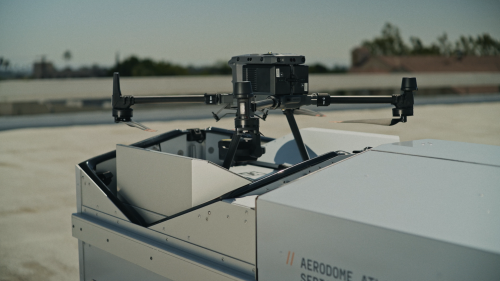
The next generation of DFR programs will reduce costs and expand operational periods by allowing public safety agencies to utilize the least number of human resources
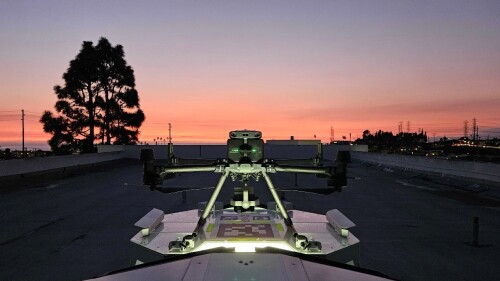
DFR provides considerable promise for increased safety, reduced response times and improved de-escalation capabilities for public safety agencies

At scale, drones as first responder programs will be one of the most positive and impactful technology-driven changes to the safety of our cities ever

What you may be overlooking when considering a Drone as First Responder program

Expert strategies for optimizing your Drone as First Responder program as it scales, from staffing and policy to technology integration and community engagement

Learn how to secure the funding you need to launch and sustain a DFR program that enhances officer safety, speeds response and improves community outcomes

Stay informed on FAA drone waivers and regulations transforming public safety operations, including DFR advancements and the latest BVLOS innovations
PUBLIC SAFETY DRONE DEPLOYMENT

Once a hobbyist’s toy, unmanned aerial vehicles (UAVs) — commonly known as drones — have become a valuable tool for law enforcement agencies across the nation

Starting or expanding a DFR program? Get expert insights, real-world case studies and best practices to boost your agency’s efficiency in this must-watch webinar

Drone as First Responder programs are giving dispatchers real-time eyes on incidents — and changing how they work with officers in the field

Inexpensive and easy to install, anti-collision lights dramatically improve drone visibility and help prevent midair collisions with manned aircraft

AI-powered drones could ease officer workloads, boost efficiency and enhance community safety

Pasco County’s use has grown dramatically as personnel find new missions and benefits

The potential banning of DJI drones may create a unique opportunity for American manufacturers to dominate the U.S. market

Drones are an escalating threat to stadiums, concerts and public gatherings — but law enforcement faces legal roadblocks. Here’s how multi-layered drone detection technology helps track, identify and stop bad actors

Police drone use is increasing, making it essential for agencies to adopt a sound law enforcement drone policy governing their use

Amelia Frasure shares her experience as the UAS program manager of the Greenville Police Department’s drone program and her passion for training the next generation of drone operators
COMPLETE COVERAGE

The program adds two drones to the Oceanside Police Department’s fleet after an initial pilot reduced response times for top priority calls by half

San Diego Police surrounded the home and used a drone to coax the suspect out after the golden retriever’s “intimidation tactics” were unsuccessful

Using a drone, Kirkland Police captured video showing that the intruder was actually a bobcat; the animal was captured and released into the wild

The man allegedly set the fire believing that there were intruders in his home; he also fired gunshots as Snohomish County sheriff’s deputies tried to rescue him

Miami Beach police Lt. Raymond Diaz shared lessons on staffing, civilian training, DFR, technology purchases, funding and cross-agency coordination

San Francisco police described how centralized drone pilots, mobile launches and real-time intelligence support investigations, tactical operations and emergency response

Skydio CEO Adam Bry explains how greater reliability, autonomous flight and specialized aircraft could allow agencies to expand DFR without adding one operator for every drone

The U.S. Open will be the first time a state or local agency will conduct independent drone mitigation operations at a major public event
MOST POPULAR

- Video: Would-be art thief caught after Ariz. PD drone spots him hiding on roof
- ‘Saved us hours in overtime': Pa. PD launches DFR program
- Video: N.M. deputies disarm children, ages 7 and 9, after standoff with loaded gun
- Ala. PD to invest $1.5M in 16 new drones
- Okla. PD’s drone program credited in rescue of man struck by train